Greece has become one of Europe’s favorite destinations for remote workers. Sunny weather, affordable living, great food, solid internet in the cities, and a welcoming culture make it easy to see why. But a digital nomad needs more than a nice view. You need a home that works as an office, a kitchen, and a base for weeks or months at a time.
That is exactly what mid-term rentals in Greece are designed for. This guide explains what they are, how they work, what they cost, and how to choose the right apartment in Athens, Kalamata, and beyond.
What Is a Mid-Term Rental in Greece?
A mid-term rental is a furnished apartment rented for one month up to about eleven months. It sits between a holiday rental (priced per night) and a traditional long-term lease (usually 12 months or more, often unfurnished).
Typical features of a mid-term rental:
- Fully furnished and equipped (kitchen, bed linen, appliances)
- Flexible monthly agreements
- Wi-Fi and often utilities included or clearly defined
- Lower effective cost per night than a hotel or holiday rental
- Simple, direct arrangements with the host
For digital nomads, this means you can arrive with a suitcase and a laptop and start working the next day.
Why Digital Nomads Choose Mid-Term Rentals Over Hotels and Airbnb
1. Better value. Nightly rates add up fast. Monthly rentals are usually far cheaper per day, and hosts often offer discounts for longer stays.
2. A real home. A full kitchen, a proper desk, laundry, and space to settle in make a big difference to productivity and wellbeing.
3. Flexibility. Unlike a 12-month lease, you can stay for two months, move on, and return next season.
4. Direct communication. Dealing with the host directly means you can discuss monthly rent, deposit, check-in, and special requests without extra layers.
5. Local experience. Living in a neighborhood, not a tourist zone, lets you build routines: a favorite café, a local bakery, a gym, a coworking space.
What to Look for in a Digital Nomad Apartment in Greece
Not every furnished apartment suits remote work. Use this checklist before you commit:
Reliable internet
Ask for the provider, connection type (fiber or ADSL), and real speed. Request a speed test screenshot from the host. Fiber is increasingly available in Athens and larger towns, while speeds in smaller areas can vary.
A proper workspace
Look for a real desk or table and a comfortable chair, not just a sofa. Good natural light is a bonus. Ask for photos of the workspace.
Heating and air conditioning
Greek summers are hot and winters can be cold indoors, especially in older buildings. Working from home all day means A/C and efficient heating are essential, not optional.
Quiet surroundings
City apartments can be noisy. Ask about the street, neighbors, and whether the bedroom or workspace faces the road.
Location and transport
Check the distance to supermarkets, cafés, coworking spaces, and public transport. In Athens, proximity to a metro station is a big advantage. In Kalamata, a central or seafront location makes daily life easy on foot.
Practical extras
Washing machine, equipped kitchen, balcony, elevator, and, if you rent a car, parking.
How Much Do Mid-Term Rentals in Greece Cost?
Prices depend on city, neighborhood, season, and the quality of the apartment. As a general guide for a furnished one-bedroom monthly rental:
| Location | Typical monthly range (approx.) |
|---|---|
| Athens, central and popular areas | €650 – €1,200+ |
| Athens, outer neighborhoods | €450 – €800 |
| Kalamata | €500 – €700 |
Indicative only. Prices rise in summer and in the most central areas, and often drop for longer stays or off-season months.
What else to budget for:
- Security deposit: commonly one month’s rent or more, depending on the host
- Utilities: electricity, water, heating, and internet, which may be included or billed separately
- Cleaning fees: sometimes charged at check-out
- Day-to-day costs: groceries, dining, transport, and coworking, all generally moderate compared with much of Western Europe
Tip: Always ask whether the quoted rent is all-inclusive or whether electricity and heating are extra. In winter or heavy A/C use, electricity can make a noticeable difference.
Best Places in Greece for Digital Nomads
Athens: the energetic capital
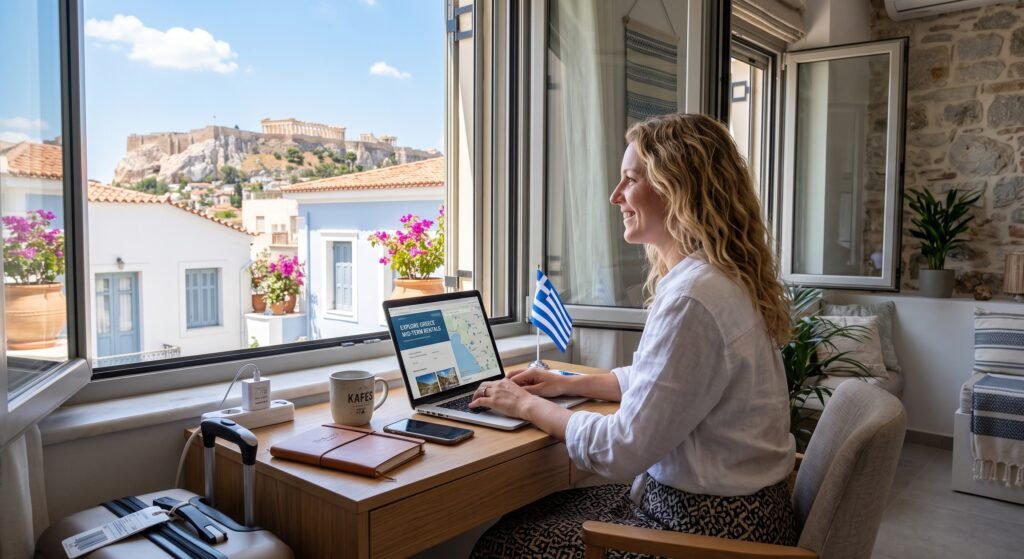
Athens offers the biggest remote-work infrastructure in Greece: international airport, metro, coworking spaces, cafés with Wi-Fi, a strong expat community, and endless culture. Popular neighborhoods for nomads include Koukaki, Pangrati, Kolonaki, Plaka, Exarchia, and Glyfada. Perfect if you want a city-life rhythm with the Acropolis as your backdrop.
Kalamata: the relaxed southern base
Kalamata combines a laid-back coastal lifestyle with real city comforts: a seafront promenade, beaches, a lively old town, excellent food, and an international airport. It is ideal for nomads who want nature, calm, and lower rents without feeling isolated. It is also a great gateway to the Mani peninsula, Messinia, and the Peloponnese.
Other options
Thessaloniki, Crete, and some islands also attract remote workers, though internet quality and winter services vary more outside the major cities.
Visas and Legal Basics for Digital Nomads in Greece
Rules depend on your nationality and length of stay, and they change, so always check official sources.
- EU/EEA citizens can live and work remotely in Greece freely, but must register for stays over three months.
- Non-EU citizens can usually stay up to 90 days in any 180-day period in the Schengen area as visitors. For longer stays, Greece offers a Digital Nomad Visa for qualifying remote workers who meet income and employment requirements.
- Tax residency: Staying more than 183 days in a calendar year can make you a Greek tax resident, which has consequences for your income tax. Speak to an accountant before a long stay.
- AFM (Greek tax number): Often needed for longer rentals, utilities, and contracts.
Important: This is general information, not legal or tax advice. Confirm current requirements with the Greek authorities or a qualified professional.
How to Rent a Mid-Term Apartment in Greece: Step by Step
- Decide your timeline and budget. One month, three months, or half a year? Knowing this helps you negotiate.
- Pick your city. Athens for buzz, Kalamata for calm.
- Search direct-with-host listings. Platforms like NomadHomeGR let you contact local homeowners directly, with no booking fees or rental commissions.
- Ask the right questions. Internet speed, workspace, heating, utilities, deposit, check-in process, and minimum stay.
- Verify the apartment. Request recent photos or a live video tour.
- Agree terms in writing. Rent, deposit, dates, house rules, and what is included.
- Pay securely. Use traceable bank transfers and keep receipts.
- Do a check-in inventory. Photograph the condition of the apartment on arrival.
Questions to Ask Your Host Before Booking
- What is the real internet speed, and who is the provider?
- Is there a proper desk and chair?
- Are utilities included? If not, what is the average monthly cost?
- Is there air conditioning and heating? Are they included in the price?
- What is the deposit, and when is it returned?
- Is there a minimum stay, and are discounts available for longer stays?
- Is there a washing machine, and is the kitchen fully equipped?
- Can I extend my stay if I like it?
Tips for Living and Working in Greece as a Digital Nomad
- Time zone: Greece is in Eastern European Time (UTC+2, UTC+3 in summer), which works well for overlap with both Europe and parts of Asia.
- Backup internet: Keep a local SIM or mobile hotspot in case of outages.
- Coworking spaces: Athens has many; smaller cities have fewer, so cafés and your apartment setup matter more.
- Seasonality: Summer is busy and pricey. Spring and autumn offer perfect weather and better rental rates.
- Siesta culture: Some shops close in the afternoon, especially outside Athens. Plan errands accordingly.
- Community: Join local expat and nomad groups to meet people quickly.
Frequently Asked Questions
What is a mid-term rental?
A furnished rental for roughly one to eleven months, between a nightly holiday rental and a traditional annual lease.
Is Greece good for digital nomads?
Yes. Good weather, reasonable costs, strong food and culture, and a growing remote-work community make Greece attractive, especially Athens and Kalamata.
How long can I stay in a monthly rental in Greece?
It depends on the host and your visa or residency status. Many apartments are available for one to several months, and extensions are often possible.
Are utilities included in monthly rentals?
Sometimes. Some hosts include them in a fixed rent, others bill electricity separately. Always confirm before booking.
Do I need a Greek bank account?
Not necessarily. Many hosts accept international transfers, but a Greek account can simplify longer stays.
Is it cheaper to rent monthly than to stay in hotels?
Almost always, especially for stays of a month or more.
Find Your Mid-Term Home in Greece
Ready to make Greece your remote-work base? NomadHomeGR connects digital nomads, expats, and remote workers directly with local homeowners offering furnished monthly rentals in Athens and Kalamata, with no booking fees and no rental commissions. Explore available properties, learn how it works, and read our safety guidance before you book.
Comments